Get Consultation from Experts
First Chat Free
Sign In
Enter your mobile number to continue
By signing in, you agree to our Terms Of Use and Privacy Policy
Download Our App For Better Experience


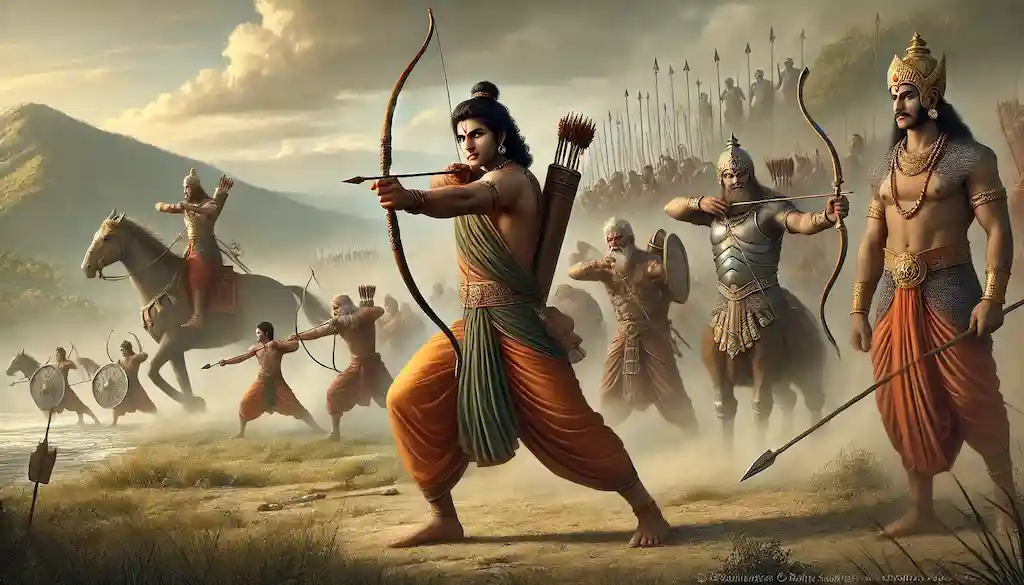
The Ramayana is one of the most revered and influential epics in human history, a divine narrative that transcends time, culture, and geography. At its heart lies the life and journey of Lord Rama, the seventh incarnation of Lord Vishnu, who is celebrated as Maryada Purushottam—the supreme embodiment of righteousness, virtue, and ideal conduct. The Ramayana is not merely a tale of a prince who goes into exile; rather, it is a profound and deeply moving exploration of the human spirit, offering timeless guidance on how to live a life rooted in truth, duty, honor, and compassion.
Through its rich storytelling and unforgettable characters, the Ramayana presents a complete framework for ethical living. It demonstrates how adherence to dharma—righteous duty—can guide individuals through even the most difficult and challenging situations. The epic weaves together themes of sacrifice, devotion, love, courage, and justice, making it not only a religious scripture but also a universal guide for life.
The story begins in the prosperous kingdom of Ayodhya, ruled by King Dasharatha, a noble and just ruler. Despite his greatness, Dasharatha is troubled by the absence of an heir. Through a sacred ritual, he is blessed with four sons—Rama, Bharata, Lakshmana, and Shatrughna.
Rama, born to Queen Kaushalya, is no ordinary prince. From his childhood, he displays extraordinary qualities—wisdom, humility, courage, and compassion. He is deeply respected by the people of Ayodhya and loved by his family. His bond with his brothers, especially Lakshmana, is a beautiful example of loyalty and affection.
Ayodhya itself is portrayed as an ideal kingdom, a place where justice prevails, and people live in harmony. Rama’s upbringing in such an environment shapes him into a leader who embodies the highest ideals of dharma.
The turning point of the Ramayana comes when King Dasharatha decides to crown Rama as the next king. However, due to the manipulation of Queen Kaikeyi’s maid, Manthara, Kaikeyi demands that her son Bharata be made king and that Rama be exiled to the forest for fourteen years.
This moment is one of the most profound tests of dharma in the epic. Rama, despite being the rightful heir, accepts the exile without hesitation. He does not question his father’s decision or express anger. Instead, he chooses to uphold his father’s word, demonstrating the highest level of obedience and righteousness.
Sita, Rama’s devoted wife, insists on accompanying him, declaring that her place is by her husband’s side in all circumstances. Lakshmana, Rama’s loyal brother, also joins them, unable to bear separation from him.
This journey into exile marks the beginning of a transformative phase in the epic, where the characters are tested through hardship, sacrifice, and moral challenges.
During their exile, Rama, Sita, and Lakshmana travel through various forests, meeting sages, ascetics, and encountering both divine and demonic beings. Their life in the forest is simple, yet it is filled with spiritual richness.
Rama’s role extends beyond that of an exiled prince; he becomes a protector of righteousness, defending sages from the disturbances caused by demons. His actions reflect his commitment to dharma, not just for himself but for the welfare of others.
The forest also serves as a backdrop for important lessons about humility, patience, and inner strength. Despite the loss of royal comforts, the trio remains steadfast, showing that true strength lies not in material wealth but in moral integrity.
The peaceful life in the forest is shattered by the arrival of Ravana, the powerful king of Lanka. Ravana is a complex character—a learned scholar and a devoted follower of Lord Shiva, yet consumed by arrogance and desire.
Through deception, Ravana abducts Sita, taking her to Lanka. This act is not just a personal violation but a symbolic disruption of cosmic order. It represents the triumph of ego over righteousness, setting the stage for the central conflict of the Ramayana.
Rama’s grief upon discovering Sita’s abduction reveals his deeply human side. Despite being divine, he experiences sorrow and pain, making his character relatable and inspiring.
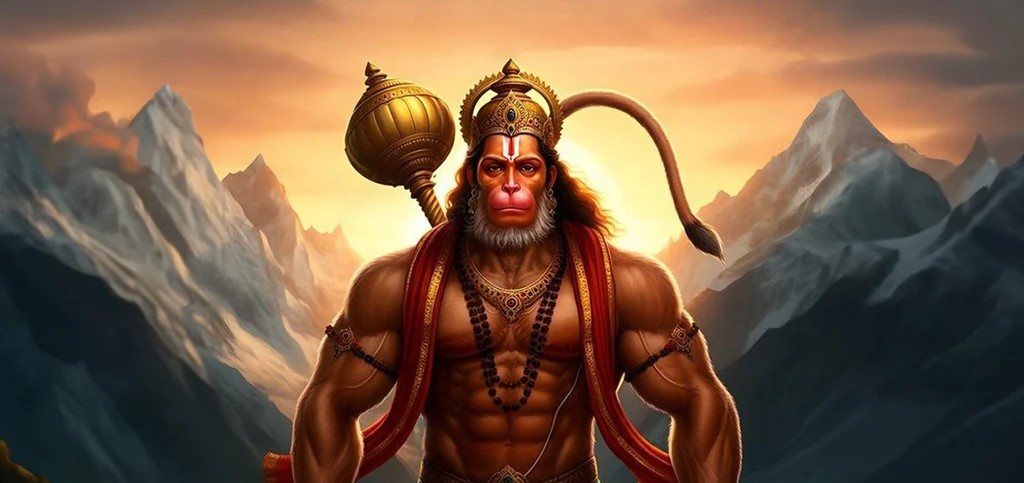
One of the most remarkable characters in the Ramayana is Hanuman, the devoted servant of Rama. Hanuman’s meeting with Rama marks the beginning of a relationship defined by unwavering loyalty and selfless service.
Hanuman’s journey to Lanka in search of Sita is one of the most celebrated episodes in the epic. His courage, intelligence, and devotion enable him to overcome numerous obstacles. Upon finding Sita, he reassures her of Rama’s love and promises her rescue.
Hanuman’s actions exemplify Bhakti (devotion) in its purest form. He serves Rama not for reward or recognition but out of complete surrender and love. His character remains an eternal symbol of faith, strength, and humility.
The Ramayana reaches its dramatic peak in the battle between Rama and Ravana. With the help of the Vanara (monkey) army, led by Sugriva and Hanuman, Rama builds a bridge to Lanka and prepares for war.
The battle is fierce and filled with heroic acts. Great warriors from both sides display courage and valor. Ultimately, Rama defeats Ravana, restoring dharma and rescuing Sita.
Ravana’s downfall serves as a powerful reminder that even the most powerful individuals cannot escape the consequences of their actions. His knowledge and strength are overshadowed by his ego, leading to his destruction.
The Ramayana is rich with timeless themes that continue to resonate in modern life:
Rama’s life is a constant demonstration of dharma. He prioritizes duty over personal desires, showing that righteousness is the foundation of a meaningful life.
The Ramayana provides a blueprint for relationships:
As a son: Rama’s obedience to Dasharatha
As a husband: His love and respect for Sita
As a brother: The bond between Rama and Lakshmana
As a leader: His just and compassionate rule
Hanuman’s devotion highlights the power of faith and surrender.
The conflict between Rama and Ravana symbolizes the eternal battle between righteousness and ego.
Every major character makes sacrifices, reinforcing the importance of integrity and moral strength.
The Ramayana remains deeply relevant in today’s world. Its teachings offer guidance on how to navigate personal and professional challenges, maintain ethical values, and build meaningful relationships.
In a world often driven by ambition and material success, the Ramayana reminds us of the importance of character, humility, and compassion. It encourages us to make choices based on integrity rather than convenience.
The Ramayana is not just an ancient epic; it is a timeless guide to life. Through the journey of Lord Rama, it teaches us that true greatness lies in living a life of righteousness, even in the face of adversity.
It shows that while evil may appear powerful, it is ultimately the quiet strength of character, unwavering faith, and commitment to truth that restore balance and harmony in the world.
The story of Rama continues to inspire millions, offering a path toward spiritual growth, moral clarity, and inner peace. It reminds us that the journey of life, like Rama’s own, is not just about overcoming challenges but about upholding values that define our humanity.