Get Consultation from Experts
First Chat Free
Sign In
Enter your mobile number to continue
By signing in, you agree to our Terms Of Use and Privacy Policy
Download Our App For Better Experience


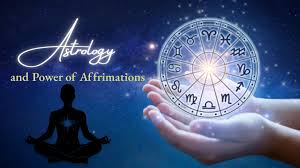
Indian Astrology, known as Jyotish Shastra, is one of the oldest and most profound systems of knowledge in human history. Rooted deeply in the Vedic tradition, it is often referred to as the “Eye of the Veda” (Vedachakshu)—a sacred science that illuminates the path of human life through the movements of celestial bodies. Far beyond the common perception of astrology as mere fortune-telling, Jyotish is a comprehensive spiritual and philosophical framework that seeks to understand the intricate relationship between the cosmos and the individual soul.
At its core, Jyotish Shastra is built upon the belief that the universe is not random or chaotic, but a highly organized and interconnected system where every movement, every alignment, and every vibration has meaning. The positions of planets, stars, and constellations at the time of a person’s birth are not seen as coincidences but as reflections of one’s past actions (karma) and present life purpose (dharma). In this way, astrology becomes a tool for self-awareness, guiding individuals toward a deeper understanding of themselves and their journey.
The philosophical foundation of Indian Astrology lies in the concept of karma—the law of cause and effect. According to this principle, every action performed in the past, whether in this life or previous ones, creates impressions that shape future experiences. Jyotish acts as a mirror that reflects these karmic patterns, helping individuals understand why certain events occur in their lives.
However, Jyotish does not promote a rigid or deterministic view of life. Instead, it emphasizes that while past karma influences present circumstances, human beings possess the power of free will. This balance between destiny and choice is one of the most unique aspects of Indian Astrology. It teaches that while we may not control the initial conditions of our lives, we can shape our responses and future outcomes through conscious effort and spiritual awareness.
One of the most important tools in Jyotish is the birth chart (Janam Kundli). This chart is created based on the exact date, time, and place of an individual’s birth. It represents the positions of celestial bodies at that precise moment and serves as a blueprint of the individual’s life.
The birth chart is divided into twelve houses, each representing different aspects of life such as personality, wealth, relationships, career, and spirituality. The placement of planets within these houses provides insights into a person’s strengths, weaknesses, opportunities, and challenges.
The chart is not just a static diagram; it is a dynamic representation of the soul’s journey. It reveals patterns that can help individuals make informed decisions, avoid potential difficulties, and align themselves with their higher purpose.
In Jyotish, the primary celestial influences are the Navagrahas (nine planets):
Sun (Surya) – Represents soul, authority, and vitality
Moon (Chandra) – Represents mind, emotions, and intuition
Mars (Mangal) – Represents energy, courage, and action
Mercury (Budh) – Represents intellect, communication, and logic
Jupiter (Guru) – Represents wisdom, expansion, and spirituality
Venus (Shukra) – Represents love, beauty, and material comfort
Saturn (Shani) – Represents discipline, karma, and justice
Rahu – Represents illusion, desire, and unconventional paths
Ketu – Represents detachment, spirituality, and liberation
Each planet carries a unique energy that influences different aspects of life. Their positions, interactions, and movements create a complex web of influences that shape individual experiences.
In addition to the planets, Jyotish places great importance on the 27 Nakshatras (lunar mansions). These are divisions of the sky that provide deeper insights into the emotional and psychological aspects of a person’s nature.
Each Nakshatra has its own characteristics, ruling deity, and symbolism. The position of the Moon in a particular Nakshatra at the time of birth plays a significant role in determining personality traits, behavior patterns, and life tendencies.
Nakshatras add a layer of subtlety and depth to astrological analysis, allowing for a more precise understanding of an individual’s inner world.
One of the most remarkable features of Indian Astrology is its ability to predict the timing of events through systems like the Vimshottari Dasha. This system divides a person’s life into periods ruled by different planets, each influencing specific experiences and outcomes.
For example:
A Jupiter period may bring growth, learning, and prosperity
A Saturn period may bring challenges, discipline, and transformation
The Dasha system highlights the dynamic nature of life, showing how different phases bring different opportunities and lessons. It reinforces the idea that life is a journey of cycles, where each phase serves a purpose in the overall evolution of the soul.
Unlike many modern interpretations of astrology that focus on predicting events, Jyotish emphasizes guidance and understanding. It does not claim to control destiny but to illuminate it.
The planets are seen as indicators, not controllers. They reflect the energies at play but do not dictate actions. This perspective empowers individuals to take responsibility for their lives rather than feeling bound by fate.
One of the most practical aspects of Jyotish is its emphasis on remedies. These are methods designed to balance planetary influences and reduce the impact of negative karmic patterns.
Common remedies include:
Chanting mantras
Meditation
Charity and selfless service
Wearing gemstones
Performing rituals (pujas)
These practices are not superstitions but tools for aligning oneself with positive energies. They encourage discipline, mindfulness, and spiritual growth.
In today’s fast-paced and uncertain world, Indian Astrology continues to hold significant relevance. People turn to Jyotish for guidance in various aspects of life, including:
Marriage and relationships
Career and business decisions
Health and well-being
Financial planning
Spiritual development
Its holistic approach makes it more than just a predictive tool; it becomes a companion in life’s journey.
At a deeper level, Jyotish is not about external events but about self-realization. It encourages individuals to look within and understand their true nature.
By studying the birth chart, one can identify patterns of behavior, emotional tendencies, and spiritual inclinations. This awareness leads to personal growth and transformation.
One of the most beautiful aspects of Indian Astrology is its vision of the universe as a connected whole. It teaches that human beings are not isolated entities but integral parts of a vast cosmic system.
Every star, every planet, and every movement in the universe is interconnected. The same energy that governs the cosmos exists within each individual. This realization fosters a sense of unity and harmony with the universe.
Indian Astrology, or Jyotish Shastra, is far more than a system of predictions—it is a profound science of life, consciousness, and cosmic order. It provides a framework for understanding the relationship between karma, destiny, and free will.
It teaches that while life may present challenges, these challenges are opportunities for growth and transformation. Through awareness, discipline, and devotion, individuals can navigate their journey with clarity and purpose.
Ultimately, Jyotish reminds us that we are not merely passive observers of our lives but active participants in a grand cosmic play. It encourages us to align with truth, embrace our responsibilities, and realize the divine light within ourselves.