Get Consultation from Experts
First Chat Free
Sign In
Enter your mobile number to continue
By signing in, you agree to our Terms Of Use and Privacy Policy
Download Our App For Better Experience


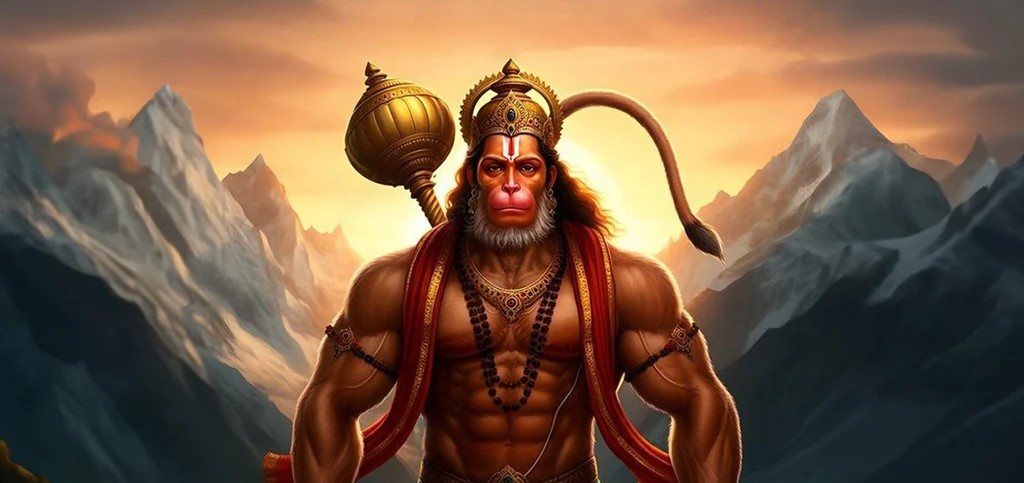
The story of Hanuman Ji is one of the most inspiring and spiritually uplifting narratives in Hindu tradition. It is not merely a tale of a powerful divine being but a profound journey into the essence of devotion, humility, strength, and self-realization. Hanuman Ji, often revered as the greatest devotee of Lord Rama, stands as a timeless symbol of Bhakti—selfless devotion that transcends ego, fear, and limitation.
Far beyond his extraordinary physical strength, Hanuman Ji represents the awakening of the hidden potential within every human soul. His life teaches us that when one surrenders completely to a higher purpose, even the impossible becomes possible. His story is not just mythology; it is a spiritual guide that reveals how faith, discipline, and devotion can transform ordinary existence into divine expression.
Hanuman Ji was born to Anjana, a celestial being, and Kesari, a powerful vanara (forest warrior). He is also considered the son of the wind god Vayu, which is why he is often called Pavanputra (son of the wind). From birth, Hanuman possessed immense strength, energy, and divine qualities.
One of the most famous stories from his childhood illustrates his innocence and power. As a young child, Hanuman mistook the rising sun for a fruit and leapt into the sky to catch it. This act not only demonstrated his incredible strength but also his fearless nature. However, due to his mischievous actions, he was later cursed by sages to forget his powers until reminded of them. This curse plays a significant role in his later life, symbolizing how humans often remain unaware of their own inner strength until awakened by purpose.
Hanuman Ji’s true greatness is revealed in the Ramayana, where he becomes the most devoted servant of Lord Rama. His meeting with Rama marks the beginning of a divine relationship that is rooted in absolute surrender and love.
From the moment Hanuman recognizes Rama as his lord, his entire existence becomes dedicated to serving him. Unlike many powerful beings who seek recognition or authority, Hanuman chooses the path of humility. He calls himself a Dasa—a servant—and finds complete fulfillment in serving Rama.
This aspect of Hanuman Ji’s character is deeply significant. It teaches that true devotion is not about rituals or external display but about complete surrender of the ego. Hanuman does not seek power, yet he possesses it in abundance. He does not seek recognition, yet he is worshipped across the world.
One of the most iconic episodes of Hanuman Ji’s life is his leap across the ocean to Lanka in search of Sita. Initially, Hanuman is unaware of his own strength. It is only when Jambavan reminds him of his true potential that he regains confidence.
This moment is deeply symbolic. It represents how human beings often doubt themselves until someone or something awakens their inner power. Once Hanuman realizes his strength, he expands his form and leaps across the vast ocean in a single bound.
During this journey, he faces several challenges—demons, illusions, and obstacles—but overcomes them all with intelligence, courage, and devotion. His success is not just due to his strength but his unwavering faith in Rama.
Upon reaching Lanka, Hanuman finds Sita imprisoned in Ashok Vatika. Instead of immediately resorting to violence, he approaches her with humility and respect. He presents Rama’s ring as proof of his identity and delivers a message of hope.
This moment highlights Hanuman Ji’s wisdom and emotional intelligence. He understands that his role is not just to act but to bring comfort and reassurance. Sita, who is surrounded by despair, finds strength in Hanuman’s words.
Hanuman’s ability to balance strength with compassion makes him a unique figure—both a warrior and a healer.
After meeting Sita, Hanuman allows himself to be captured by Ravana’s forces to assess their strength. When his tail is set on fire, he uses it as an opportunity to burn down Lanka.
However, his destruction is not driven by anger but by purpose. He ensures that Sita remains unharmed, demonstrating his control and discipline. This episode teaches that true power lies not in destruction but in the ability to use strength wisely and responsibly.
During the battle between Rama and Ravana, Lakshmana is severely injured. The only cure is a special herb called Sanjeevani, found on a distant mountain.
Hanuman is sent to retrieve it. Unable to identify the exact herb, he lifts the entire mountain and carries it back. This act symbolizes ultimate dedication—when clarity is lacking, effort and determination must compensate.
It also reinforces the idea that devotion eliminates fear and hesitation. Hanuman does not question the difficulty of the task; he simply acts.
Hanuman Ji is believed to possess the Ashta Siddhis (eight supernatural powers):
Anima (becoming small)
Mahima (becoming large)
Garima (becoming heavy)
Laghima (becoming light)
Prapti (achieving anything)
Prakamya (fulfilling desires)
Ishitva (control over nature)
Vashitva (control over others)
He is also associated with the Nava Nidhis (nine forms of wealth).
Yet, despite possessing such immense powers, Hanuman remains humble. He never uses his abilities for personal gain. This is one of the most powerful lessons from his life—that true greatness lies in restraint and service.
Hanuman Ji is not just a mythological figure; he is a symbol of deeper spiritual truths:
His unwavering love for Rama represents the highest form of devotion.
He teaches that strength should be guided by humility and purpose.
His forgotten powers symbolize the hidden potential within every human being.
His celibacy and focus reflect the importance of self-control.
Hanuman faces every challenge with courage, reminding us to overcome fear.
In today’s fast-paced and stressful world, Hanuman Ji remains a source of inspiration for millions. His life offers practical lessons:
In times of fear → Remember Hanuman’s courage
In times of doubt → Recall his leap to Lanka
In times of weakness → Think of the Sanjeevani mountain
In times of ego → Learn from his humility
He teaches that success is not just about ability but about mindset and devotion.
Hanuman Ji is a perfect role model for every aspect of life:
As a devotee → Complete surrender
As a warrior → Fearless and strategic
As a servant → Selfless and loyal
As a leader → Wise and compassionate
His personality combines strength, intelligence, humility, and devotion—qualities that define true greatness.
The story of Hanuman Ji is a timeless reminder of the power of devotion and the strength that lies within each of us. He teaches that when the ego is surrendered and the heart is aligned with a higher purpose, even the greatest challenges can be overcome.
Hanuman Ji is not just a character in the Ramayana; he is a living symbol of faith, courage, and selfless service. His presence continues to inspire generations, guiding them toward a life of discipline, devotion, and inner strength.
Ultimately, Hanuman Ji shows us that the greatest power in existence is not physical strength or supernatural ability, but the pure and unwavering love that connects the devotee to the Divine. This love transcends all boundaries—time, space, and even death—and becomes the ultimate path to liberation.