Get Consultation from Experts
First Chat Free
Sign In
Enter your mobile number to continue
By signing in, you agree to our Terms Of Use and Privacy Policy
Download Our App For Better Experience


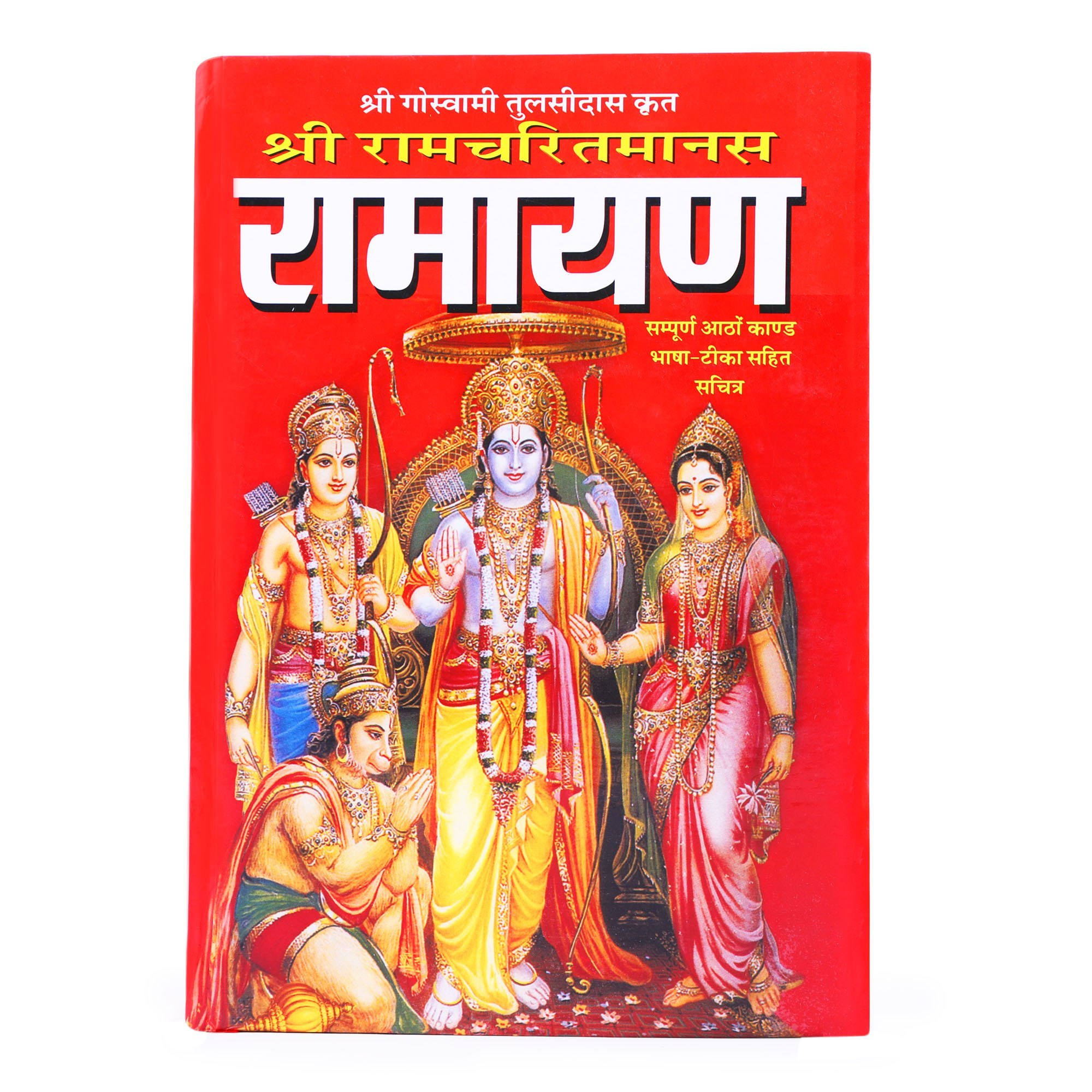
A Ramayana book is more than just a historical epic; it is a spiritual compass that outlines the ideals of Dharma (duty) and Maryada (honor). Whether you choose the original Sanskrit Valmiki Ramayana or the popular Awadhi Ramcharitmanas by Tulsidas, the book serves as a roadmap for ethical living. It is traditionally structured into seven Kandas (chapters), detailing Lord Rama's journey from his miraculous birth in Ayodhya to his triumphant return after defeating the demon-king Ravana. Physically, a standard edition is often bound in red or saffron cloth, symbolizing its sacred status. The pages contain a rhythmic blend of Chaupais (verses) and Dohas (couplets), usually accompanied by a simplified translation and vibrant illustrations of iconic scenes like the building of the Ram Setu or the burning of Lanka. Owning and reading the Ramayana is believed to bring peace, mental strength, and domestic harmony to a household, making it a staple in Indian homes for centuries.